
A paralegal is a legal support professional who assists attorneys with tasks such as legal research, document preparation, case organization, and administrative work related to legal matters. Paralegals play an important role in improving efficiency within law firms, corporations, government agencies, and other legal organizations.
Although paralegals work closely with attorneys, they are not licensed lawyers and cannot independently provide legal advice, represent clients in court, or practice law. Instead, they support attorneys by preparing information, managing case materials, and helping legal teams handle their workload more effectively.
Understanding the role, responsibilities, education requirements, and career opportunities of paralegals can help individuals determine whether this legal profession matches their interests and career goals.
What Does a Paralegal Do? Duties, Responsibilities, and Limitations
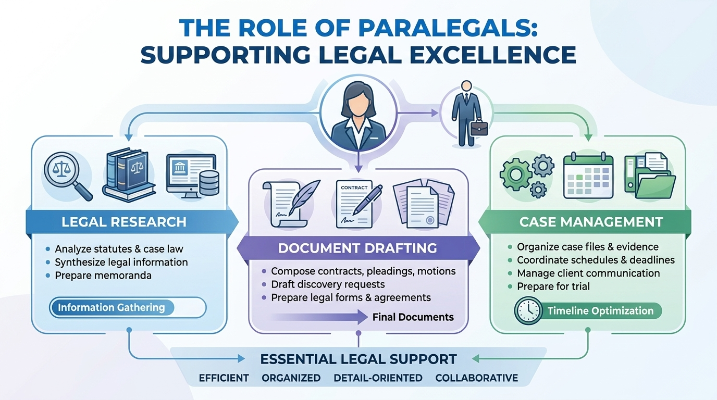
Paralegals undertake a wide range of tasks that are integral to the functioning of law firms and legal departments. Their responsibilities include conducting legal research, drafting legal documents, organizing case files, and assisting attorneys with trial preparation. These tasks enable attorneys to operate more efficiently and effectively. However, it is essential to recognize certain limitations placed upon paralegals. They cannot provide legal advice to clients or make appearances in court, which helps safeguard the legal profession's integrity and ensures that such responsibilities remain solely in the purview of licensed attorneys.
Paralegal Education Paths: Degree, Certificate, and Training Options
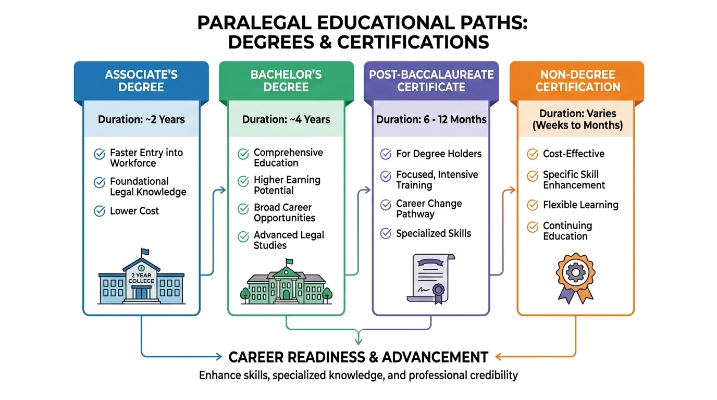
Aspiring paralegals can pursue various educational paths, each presenting unique advantages and challenges. An Associate Degree in paralegal studies typically requires two years to complete and encompasses basic legal principles, research techniques, and practical skills essential for entry-level positions. Conversely, a Bachelor’s Degree in a related field generally provides broader knowledge and often leads to better job opportunities and starting salaries. Additionally, a Post-Baccalaureate Certificate suits those who already hold a degree and wish to enhance their qualifications for paralegal roles, making them more attractive to employers. Some individuals may opt for Employer Training, where law firms provide on-the-job training, tailored to their specific needs. Finally, Experience-Based Routes, such as internships during academic programs, are crucial, allowing students to develop skills in a real-world environment, which is highly respected by employers.
Paralegal Certificate vs. Certification: Requirements and State Rules
Understanding the nuances of paralegal education is essential for aspiring professionals. A Paralegal Certificate signifies completion of a specific educational program but is different from voluntary Professional Certifications, which demonstrate higher professional standards and expertise. Furthermore, diverse Jurisdiction-Specific Registration and licensing requirements can exist, so prospective paralegals must be familiar with the rules that apply in their area. Programs accredited by the American Bar Association (ABA) can enhance employability significantly. It is critical to dispel common misconceptions around ABA certifications, such as the belief that they confer additional legal authority, when in fact they serve primarily as a mark of quality education.
Essential Paralegal Skills and How to Gain Experience
Aspiring paralegals should focus on developing essential skills that are highly valued in the legal profession. Proficiency in legal research, effective writing abilities, and technology expertise are critical competencies that enhance job readiness. Furthermore, gaining practical experience through internships is invaluable; hands-on exposure to legal practice not only reinforces academic learning but also significantly improves employability by allowing candidates to network within the legal community and showcase their capabilities to potential employers.
How to Become a Paralegal: Steps to Start Your Career
Entering the paralegal field requires a systematic approach that enhances the likelihood of securing a position. Prospective paralegals should:
- Research jurisdiction-specific requirements to inform educational choices.
- Obtain an accredited education from a recognized institution.
- Develop strong legal research and writing skills through coursework and practice.
- Pursue internships to gain hands-on experience in legal settings.
- Ensure proficiency in legal technology necessary for modern practice.
- Understand the ethical responsibilities that govern paralegals' work.
- Create a polished professional resume outlining relevant experiences.
- Prepare thoroughly for job interviews, anticipating common questions and scenarios.
Paralegal Salary, Job Outlook, and Work Environment
According to the U.S. Bureau of Labor Statistics (BLS), the average salary for paralegals and legal assistants is competitive, reflecting the importance of these roles within the legal system. Job outlook indicates positive trends, with a projected growth rate that surpasses many other professions, driven by the expanding complexity of legal issues. Paralegals typically work in diverse environments, including private law firms, corporate legal departments, and governmental agencies, highlighting the versatility and demand for skilled professionals in various sectors of law.
Paralegal Career Advancement Opportunities and Growth Paths
As paralegals gain experience, numerous career advancement opportunities become available. They can specialize in different areas of law, such as family law, criminal law, or corporate law, providing them with chances to become experts in specific domains. Additionally, as they develop their careers, paralegals may progress to higher roles, such as senior paralegal or even legal manager, allowing for greater responsibility and influence within legal practices.
Next Steps to Start Your Paralegal Career
Starting a career as a paralegal requires a combination of education, practical skills, and professional preparation. Aspiring paralegals can begin by researching education requirements, choosing a suitable certificate or degree program, developing legal research and communication skills, and gaining hands-on experience through internships or entry-level legal roles.
Professional certification may also strengthen career opportunities, depending on individual goals and employer expectations. By understanding the responsibilities, qualifications, and career pathways involved, future paralegals can create a practical plan for entering the legal field.
When researching career requirements, it is important to rely on trusted sources such as the Bureau of Labor Statistics and professional legal organizations for updated information on education standards, employment trends, and industry expectations.